Thermodynamic and Mechanical Systems Characterization
Overview
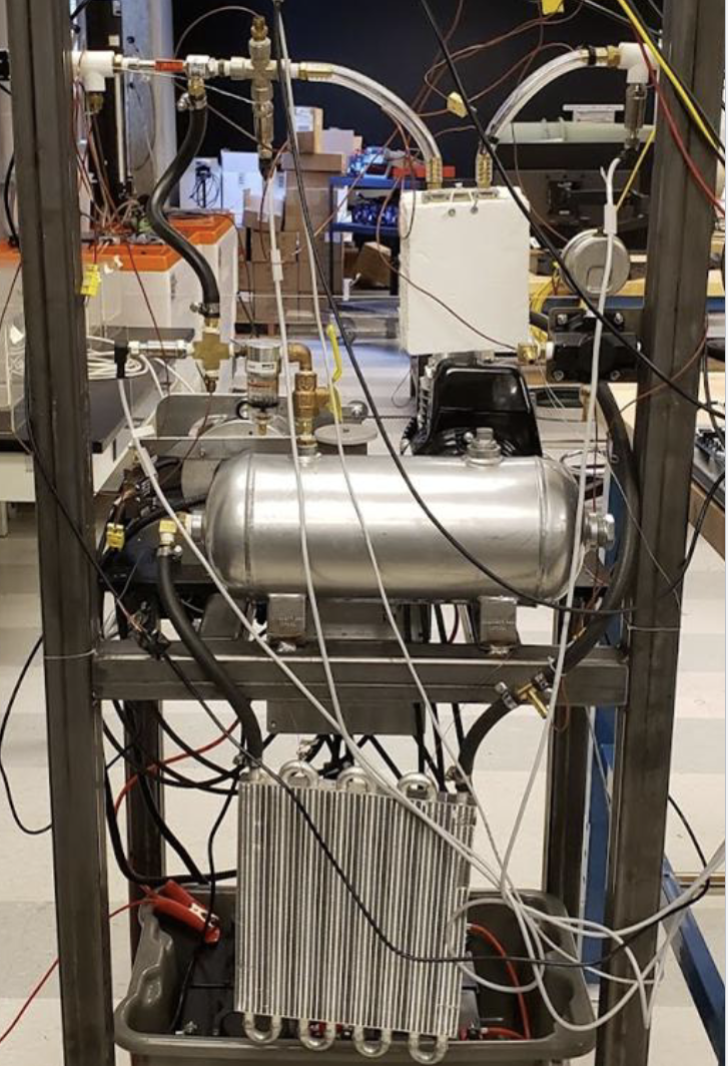
Over two consecutive weeks of experimental testing, I evaluated the thermodynamic and mechanical losses of two pressurized air energy conversion systems to quantify the divergence between idealized models and empirical performance.
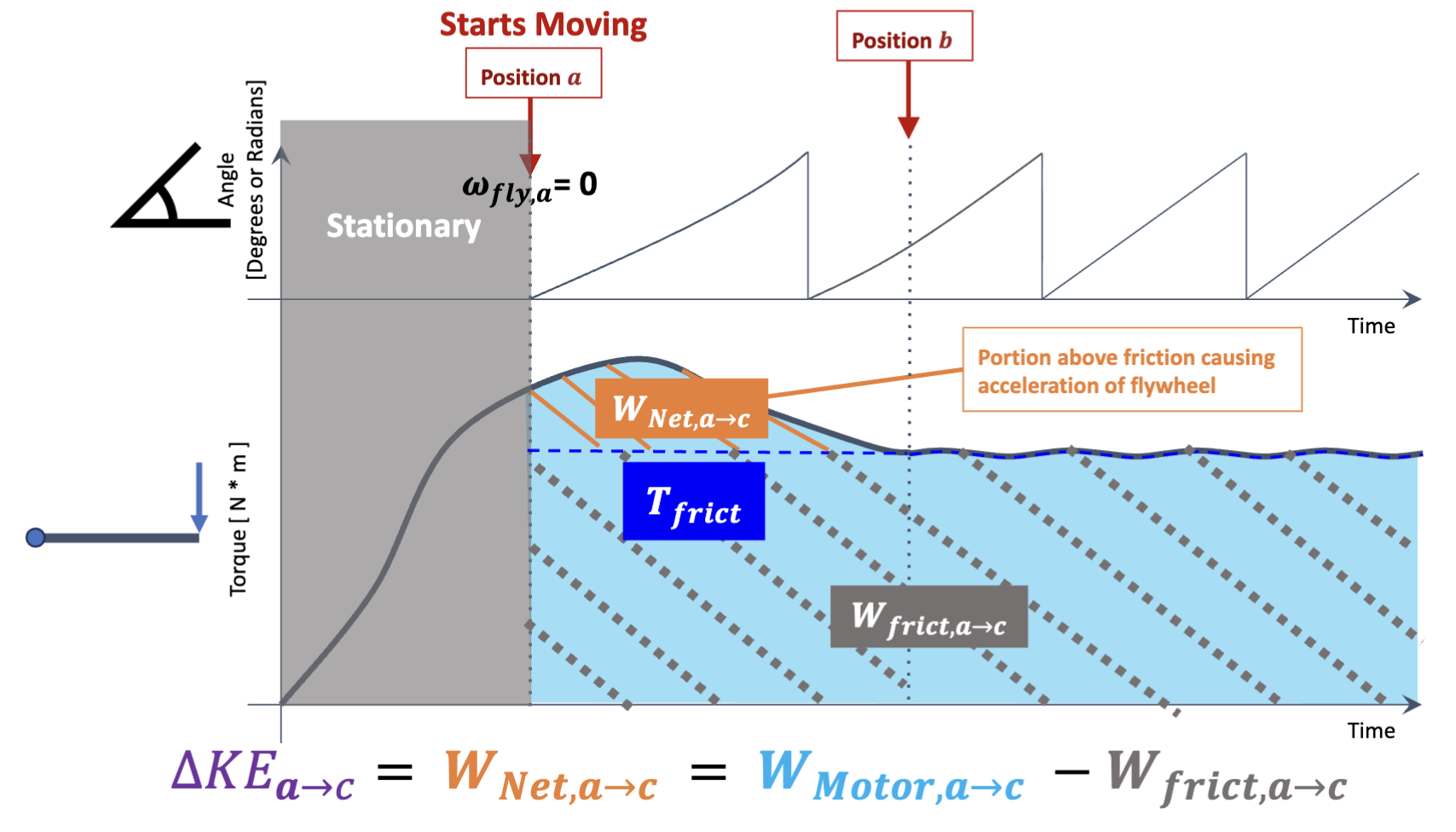
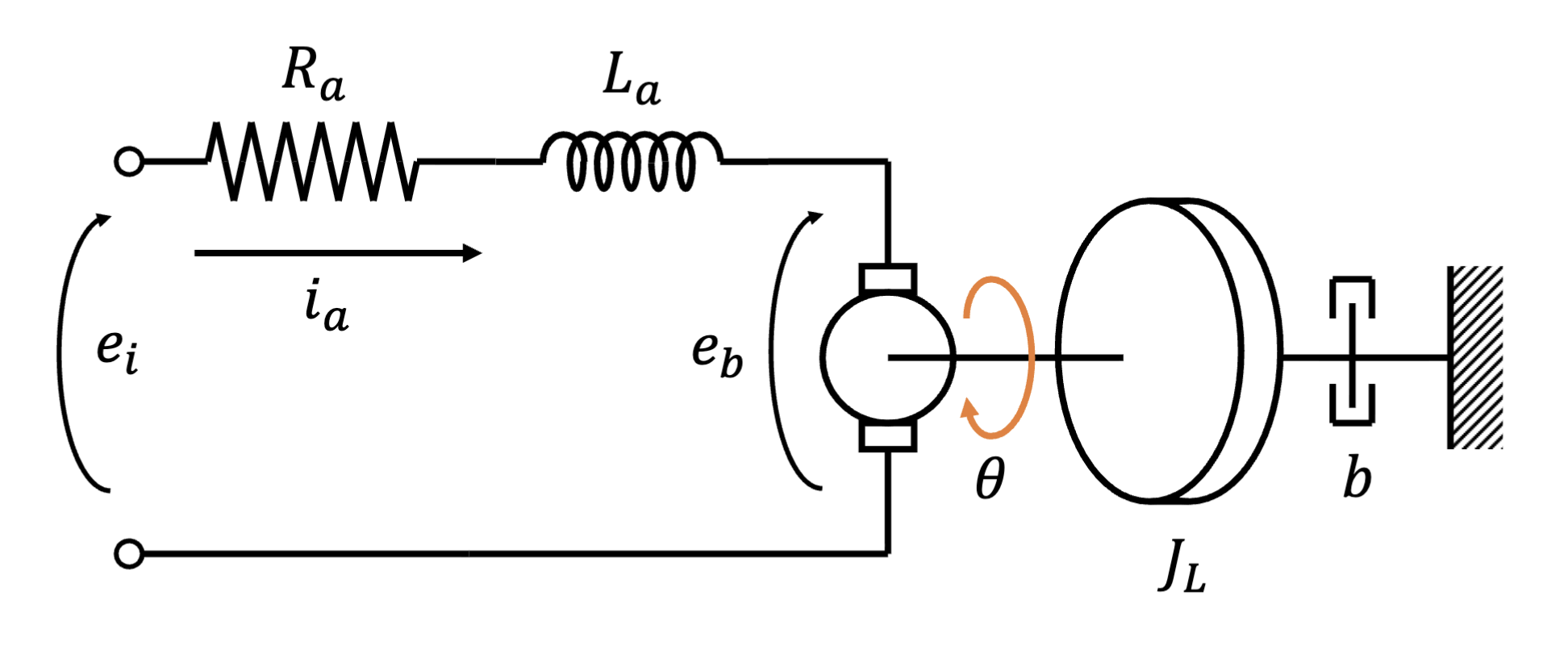
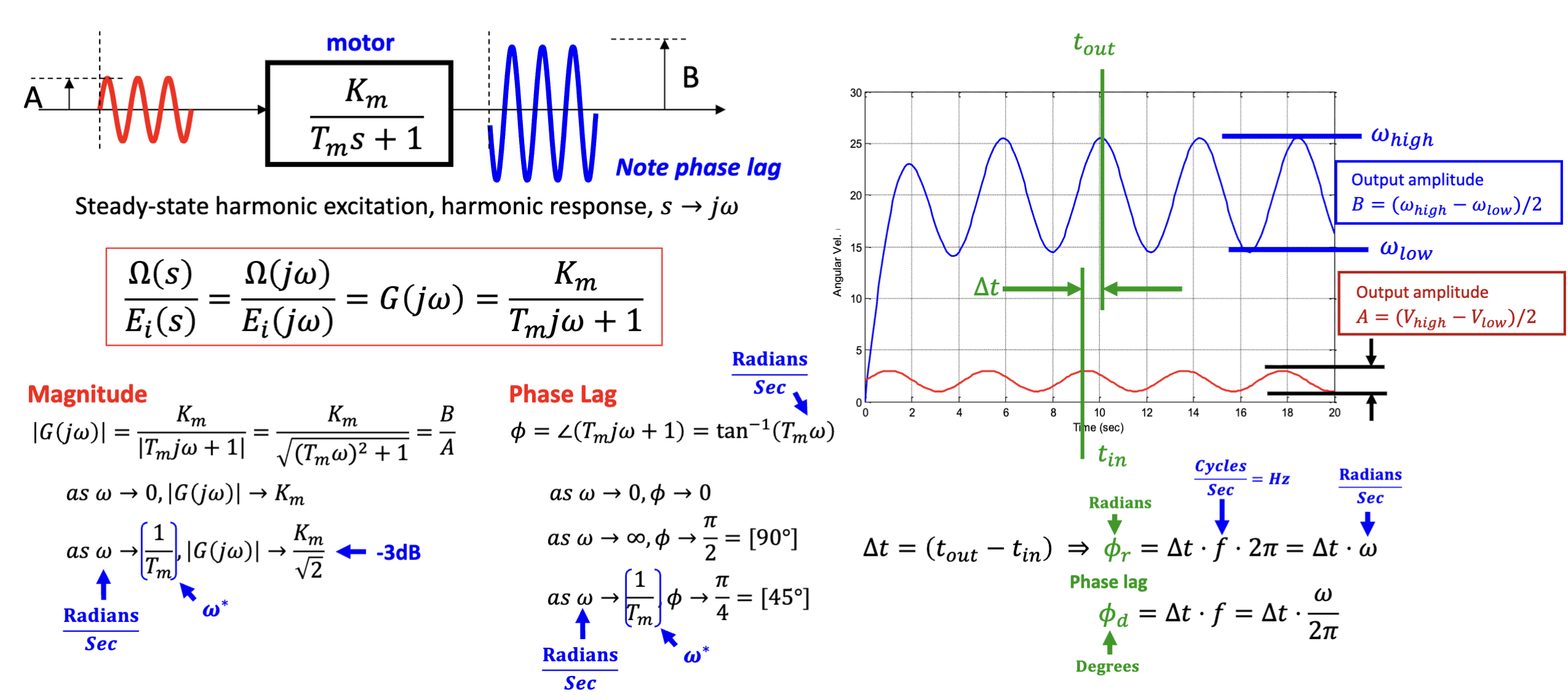
The first test was a pneumatic internal combustion engine coupled to an electric motor and variable inertia flywheels. By characterizing transient acceleration and steady state velocity limits, I established a combined Coulomb and Newtonian friction model and verified the system moment of inertia. Integrating torque data over the four stroke cycle revealed that experimental work of air achieved only thirty percent of theoretical adiabatic predictions due to severe heat transfer and piston ring blow-by. I utilized these empirical constraints to optimize the pneumatic injection window at a 0.8 volts motor setting, maximizing the net positive power output at 97.9 Watts.
IC Engine Documentation
Overview
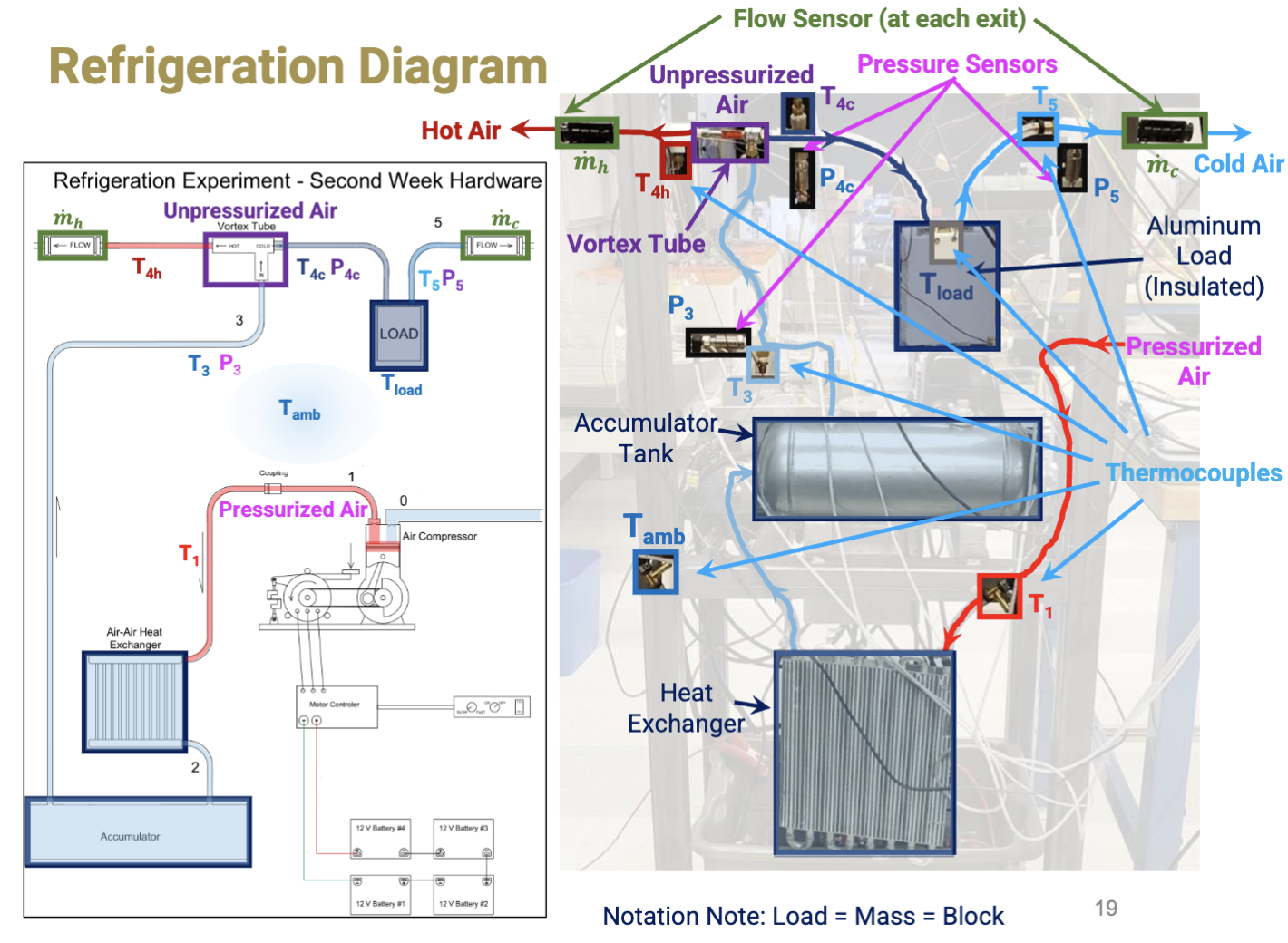
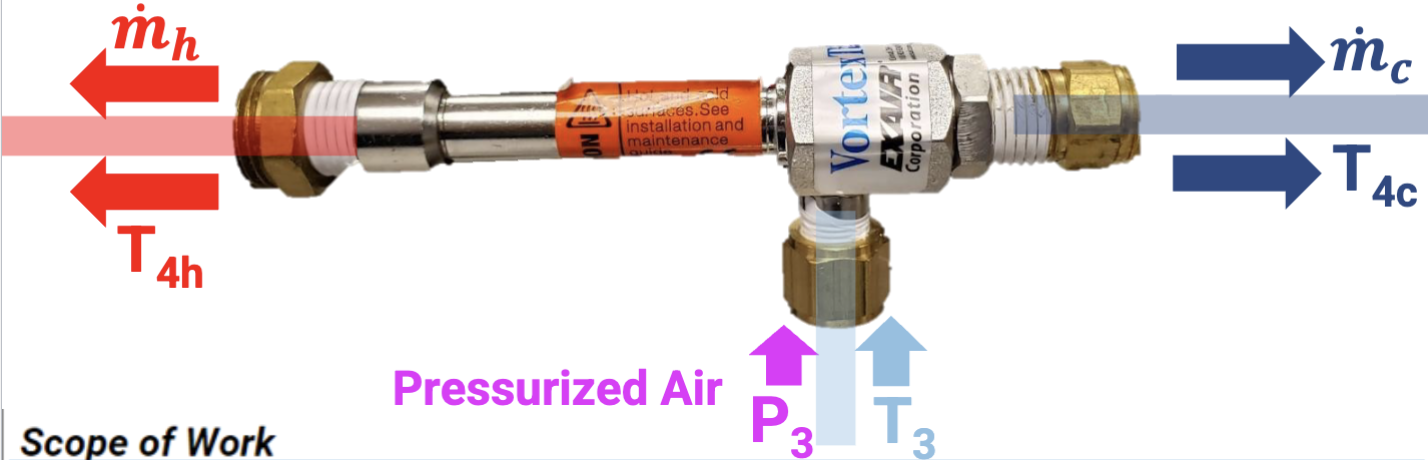
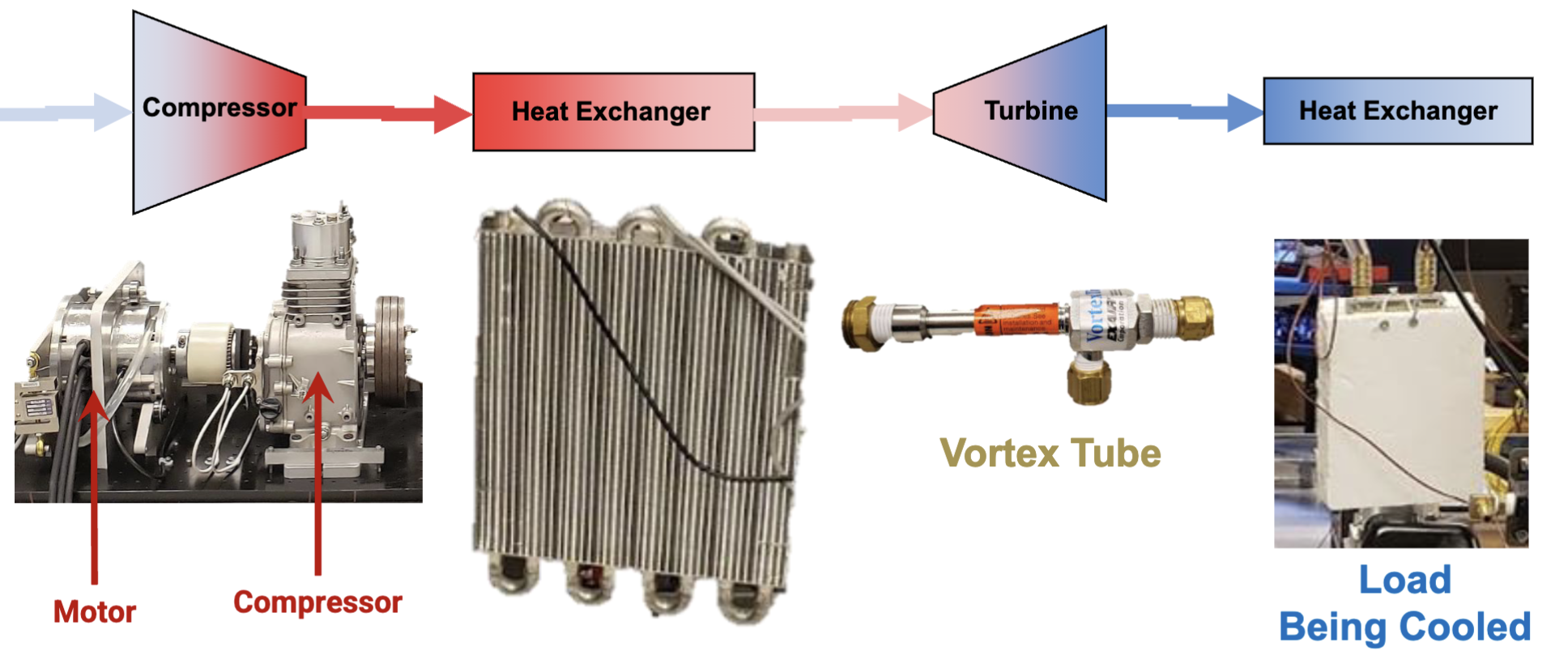
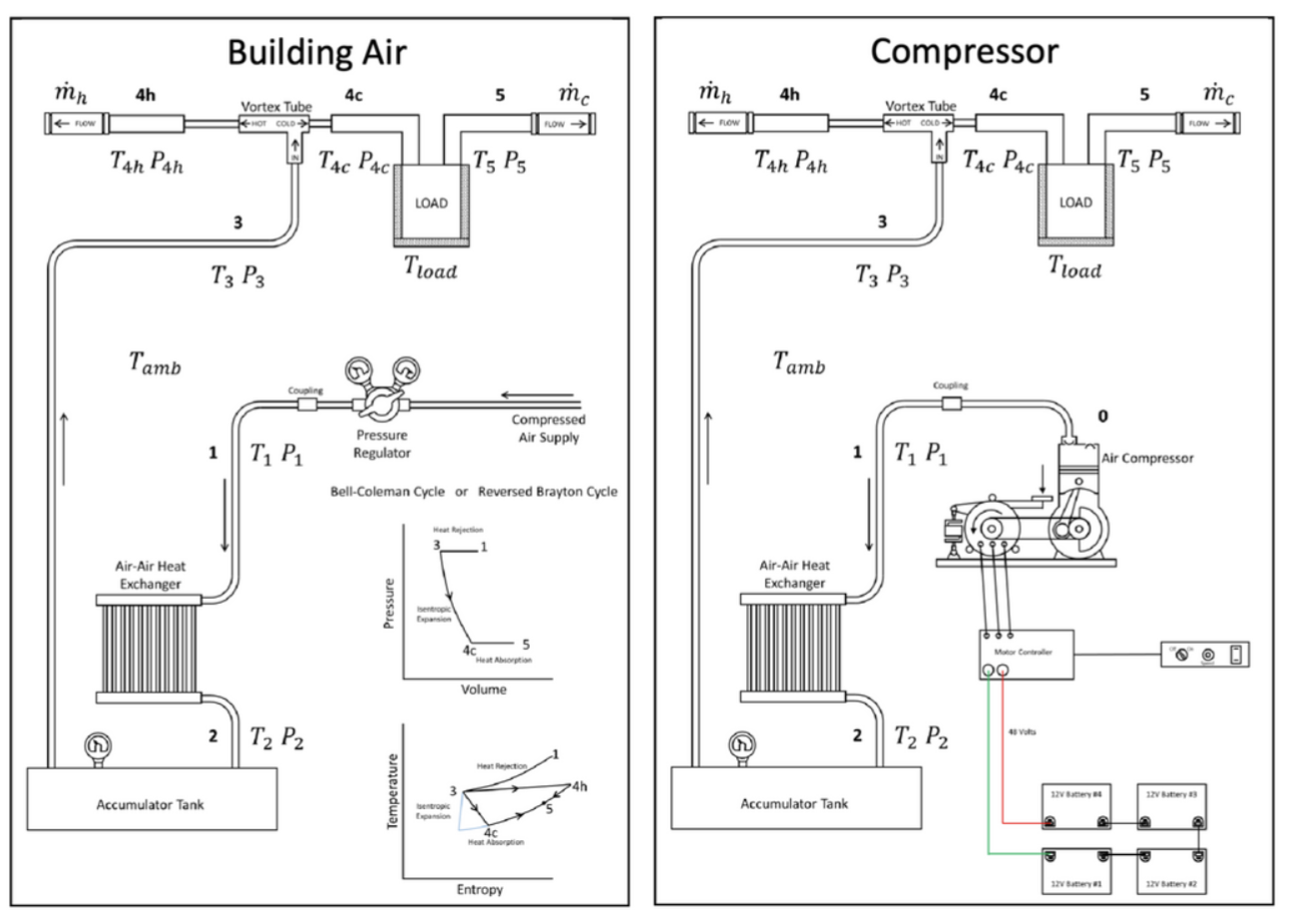
The following week I utilized the same pressurized air system but for mechanical work to cool an insulated aluminum load with a vortex tube refrigeration system. Applying steady state and transient energy balances, I characterized the nonlinear temperature outputs and linear mass flow rates as functions of vortex tube inlet pressure. Similar to the adiabatic deviations in the pneumatic engine, thermal evaluation exposed critical systemic inefficiencies where the experimental thermal resistance plateaued at 3.1 Kelvin seconds per Joule, drastically underperforming the geometric theoretical limit of 25.51 Kelvin seconds per Joule. Statistical analysis determined this discrepancy was driven by parasitic convective heat leaks at the unsealed tubing sections, proving that simplified lumped capacitance models are insufficient for physical assemblies with structural boundary flaws.