Kill Web and Autonomous Systems CAD Studies
Overview
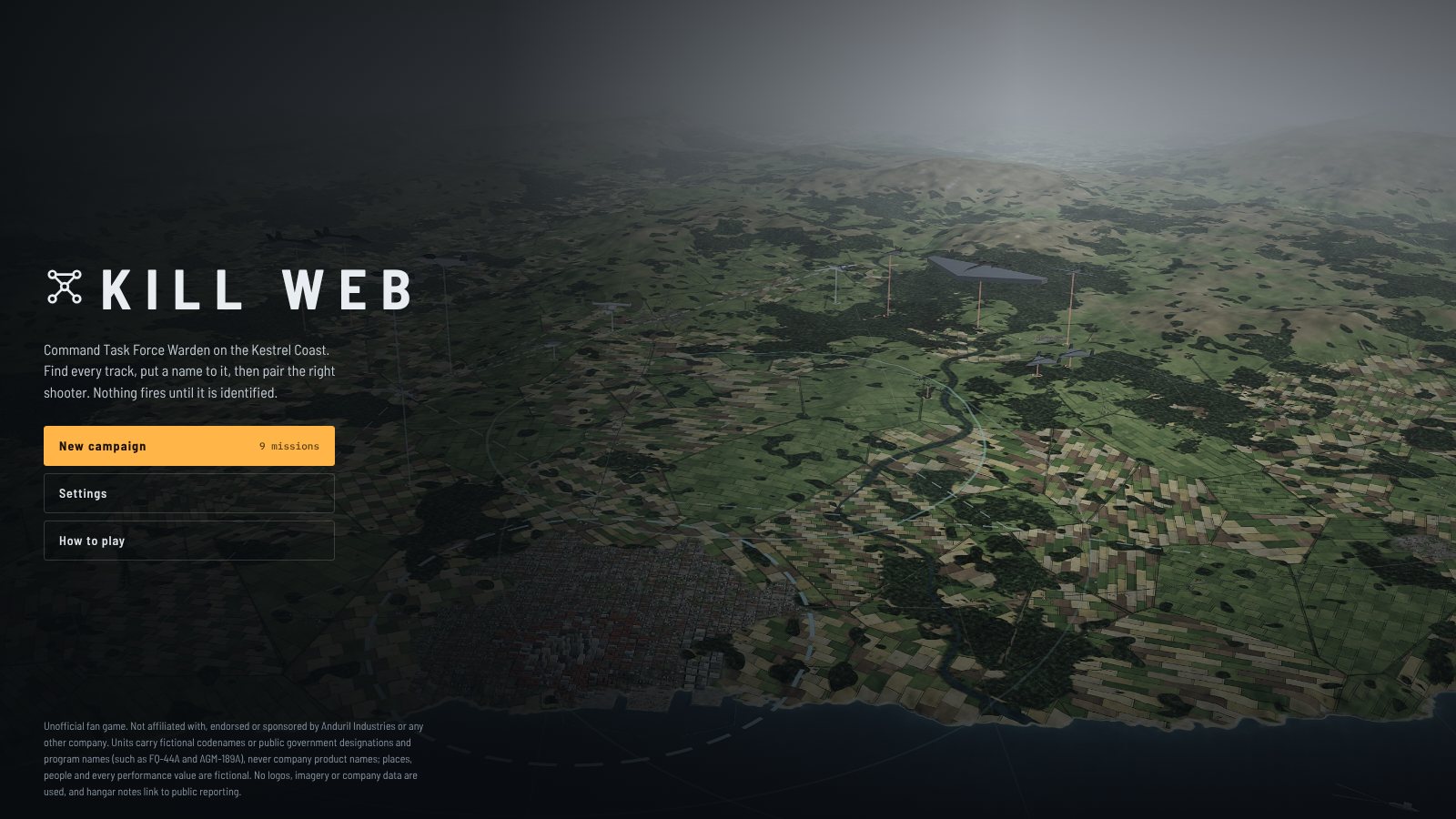
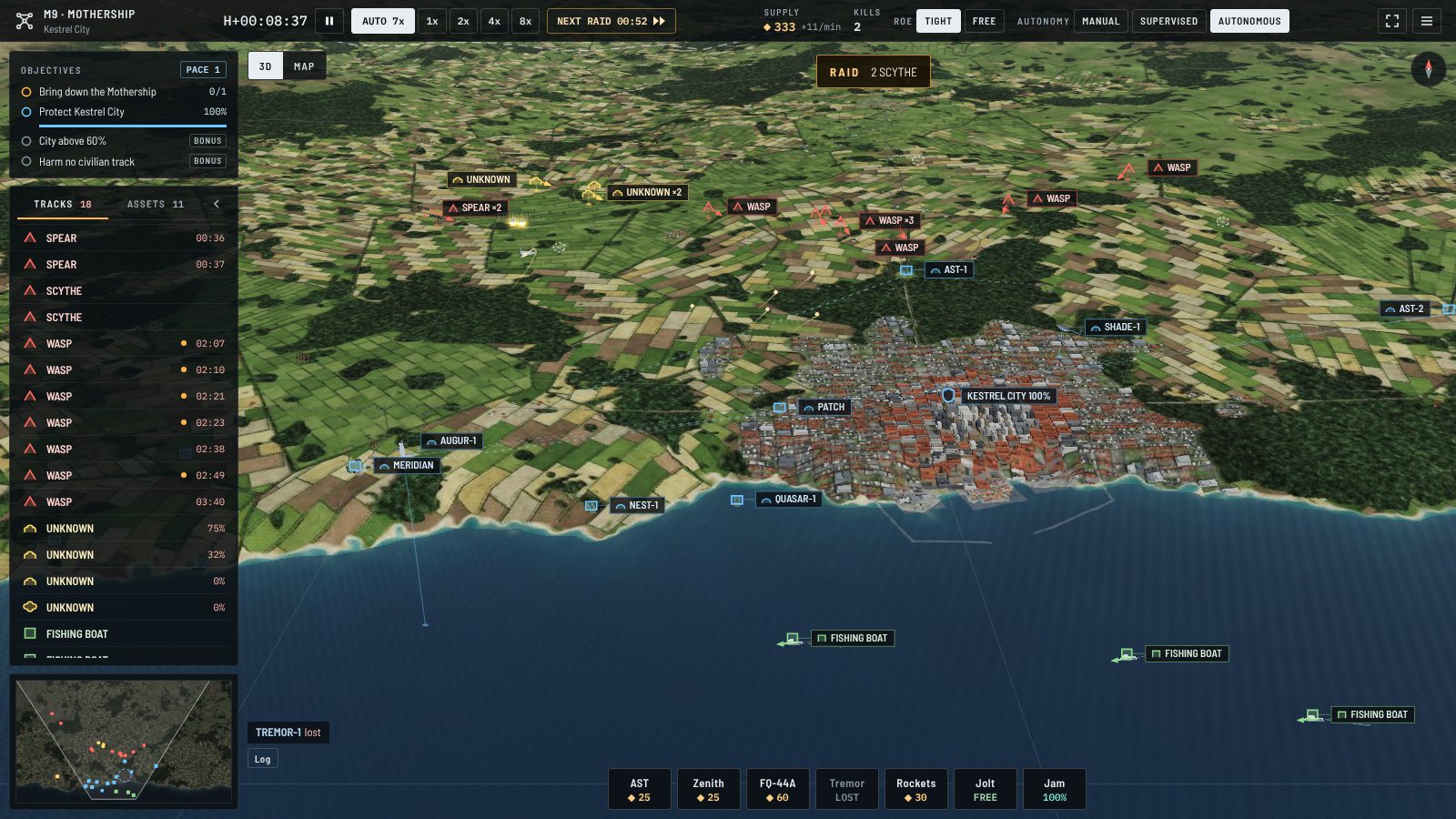
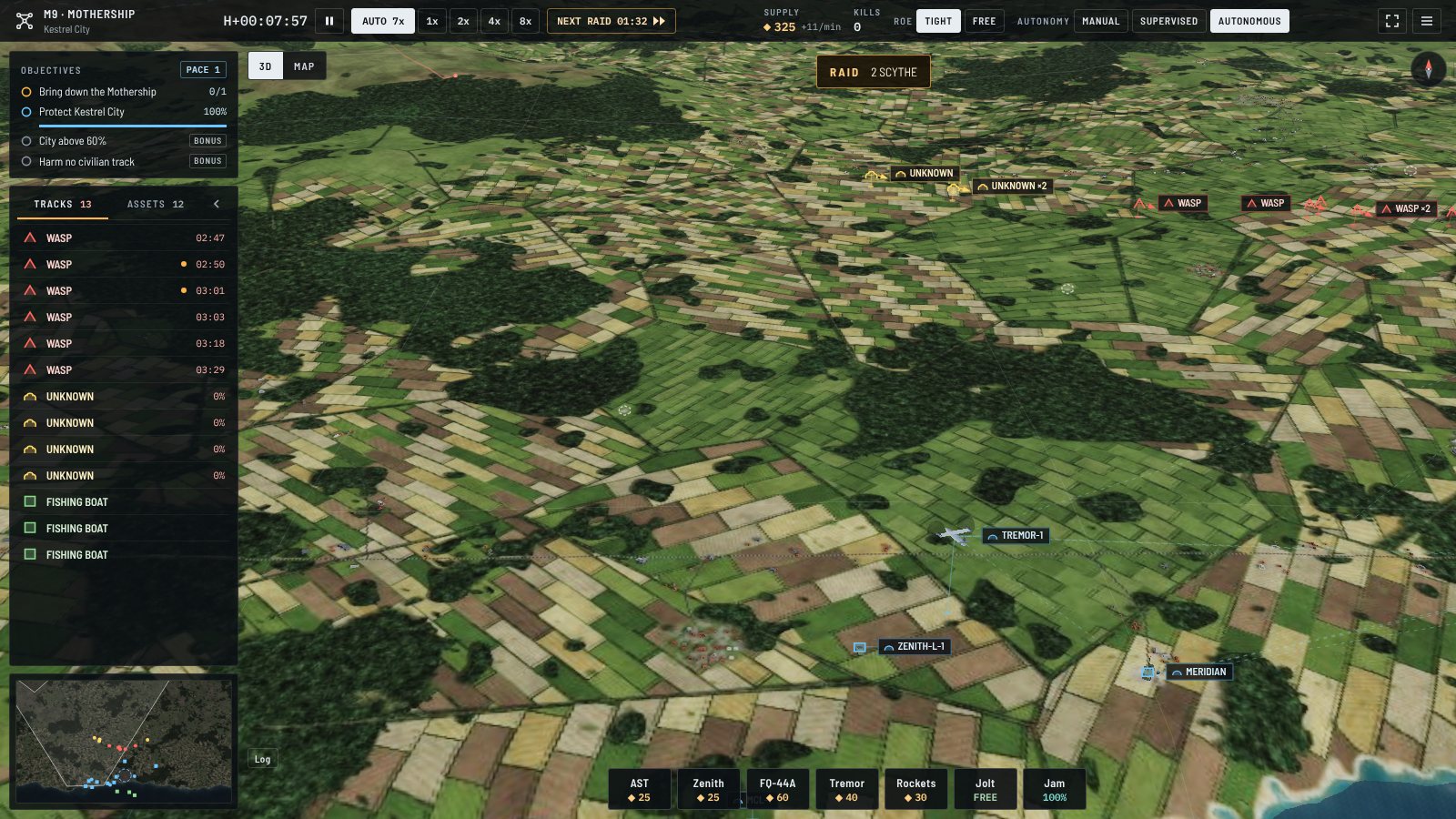
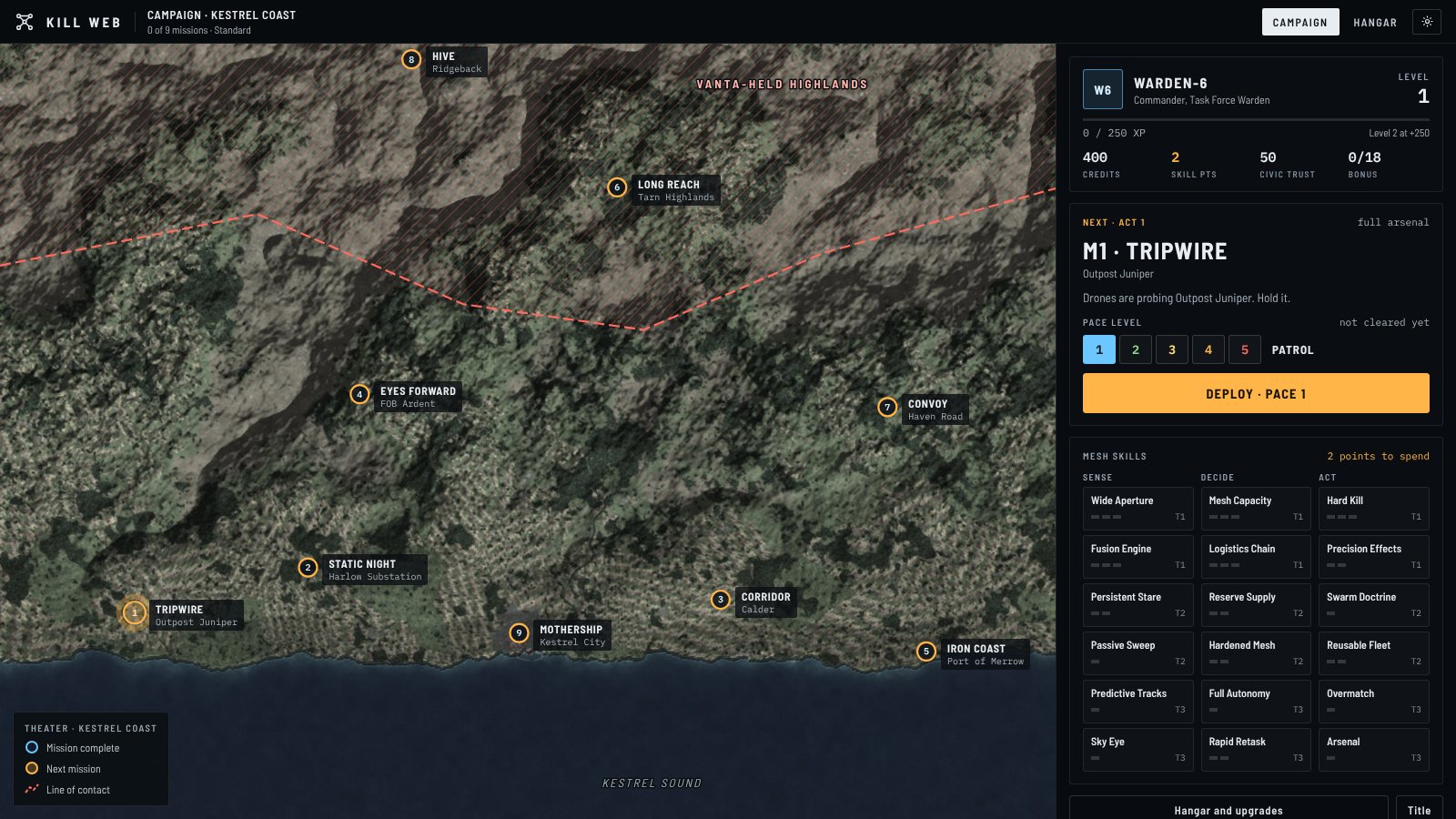
Kill Web is a real-time command game that runs in the browser. The player finds every track, identifies it, then pairs the right shooter, because nothing fires until a track is identified. It has nine missions on the fictional Kestrel Coast and five pace levels that speed the enemy up faster than the player. The same project documents three CAD assemblies modeled in Python, which you can orbit below in an exterior-only 3D viewer, and two interactive isometric anatomy figures. Every game value is fictional, and the published CAD shows exterior shape only.
Play Kill Web
Plays in landscape with mouse, trackpad or touch. Right-click a hostile to engage (long-press on touch), N skips to the next raid, Space pauses. On a phone or tablet, Play opens the full-size game, which goes full screen on your first tap; iPhone Safari can't do that for web pages, so there Install app on the title screen adds it to the Home Screen instead. Progress saves in your browser.
How the Game Works
The simulation advances in fixed 0.25 s steps and never touches the DOM or WebGL, so the same code drives the browser game and a headless Node test harness. The client is 6,212 lines of JavaScript in 10 ES modules with no framework or build step. three.js renders each mission's 48 x 38 km map as a 640 x 507 height mesh under a 4,096 x 3,243 ground texture, with 1,491 to 6,377 instanced buildings per mission, all generated from the simulation's own terrain functions. Sound is synthesized at runtime, so the whole game is a 78-file, 36.8 MB static site.
Pace replaces unlock grinding: the full arsenal is available from mission 1, and at the top level raids arrive 1.75 times as often and fly 1.45 times as fast while friendly deployment speeds up by 1.4. A scripted commander plays every mission headless at every pace with 10 fixed seeds; the latest 450-run sweep wins 92.7% overall (87.8% to 98.9% by pace), and median mission time falls from 36 to 22 game minutes between the first and fifth pace levels. The harness caught design faults before players did, including a convoy mission that got easier at higher pace.
CAD Studies
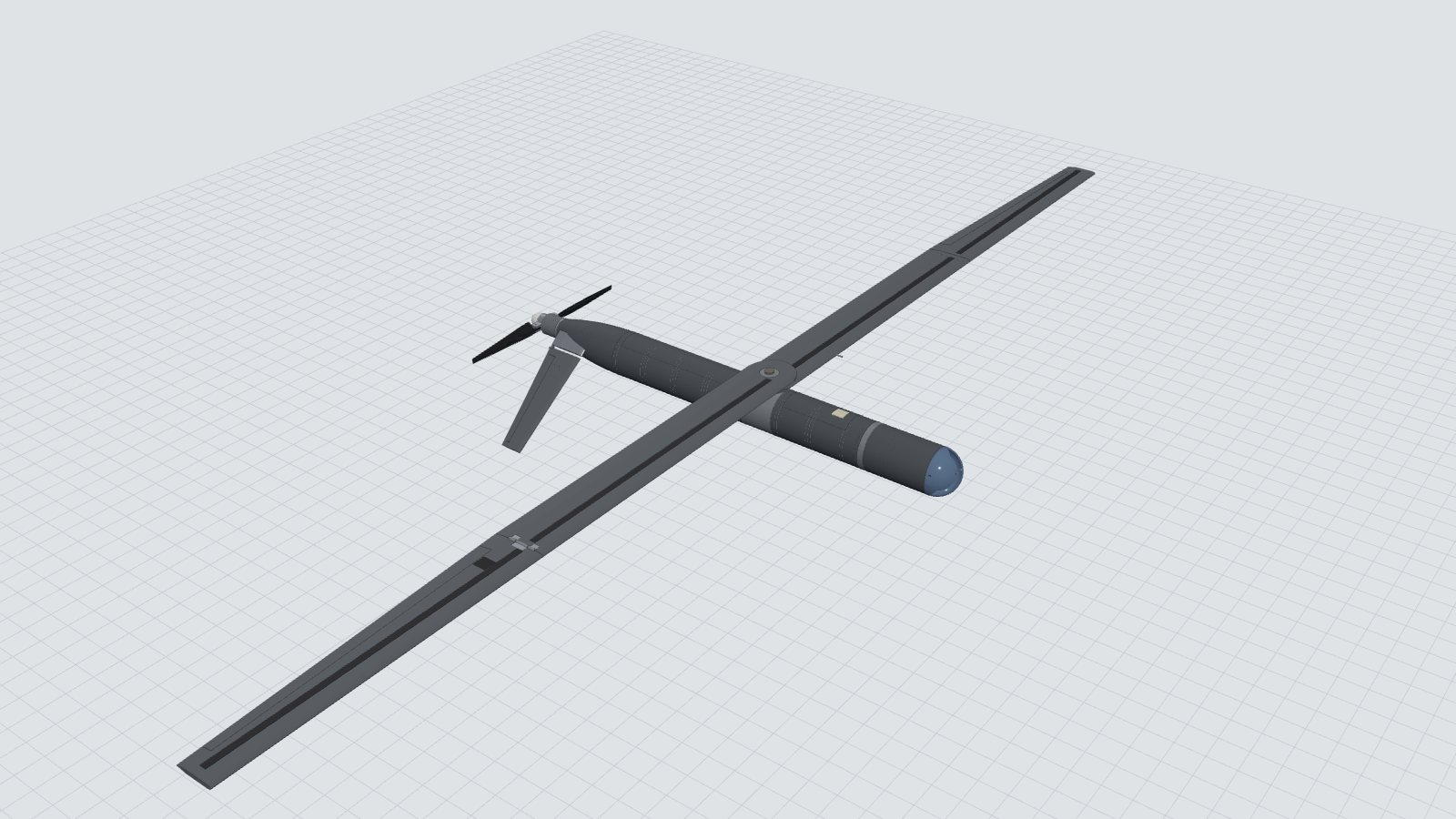
- LE-SR tube-launched UAS, representative model of a publicly shown aircraft: 60 unique parts, 150 instances, checked in flight and stowed configurations.
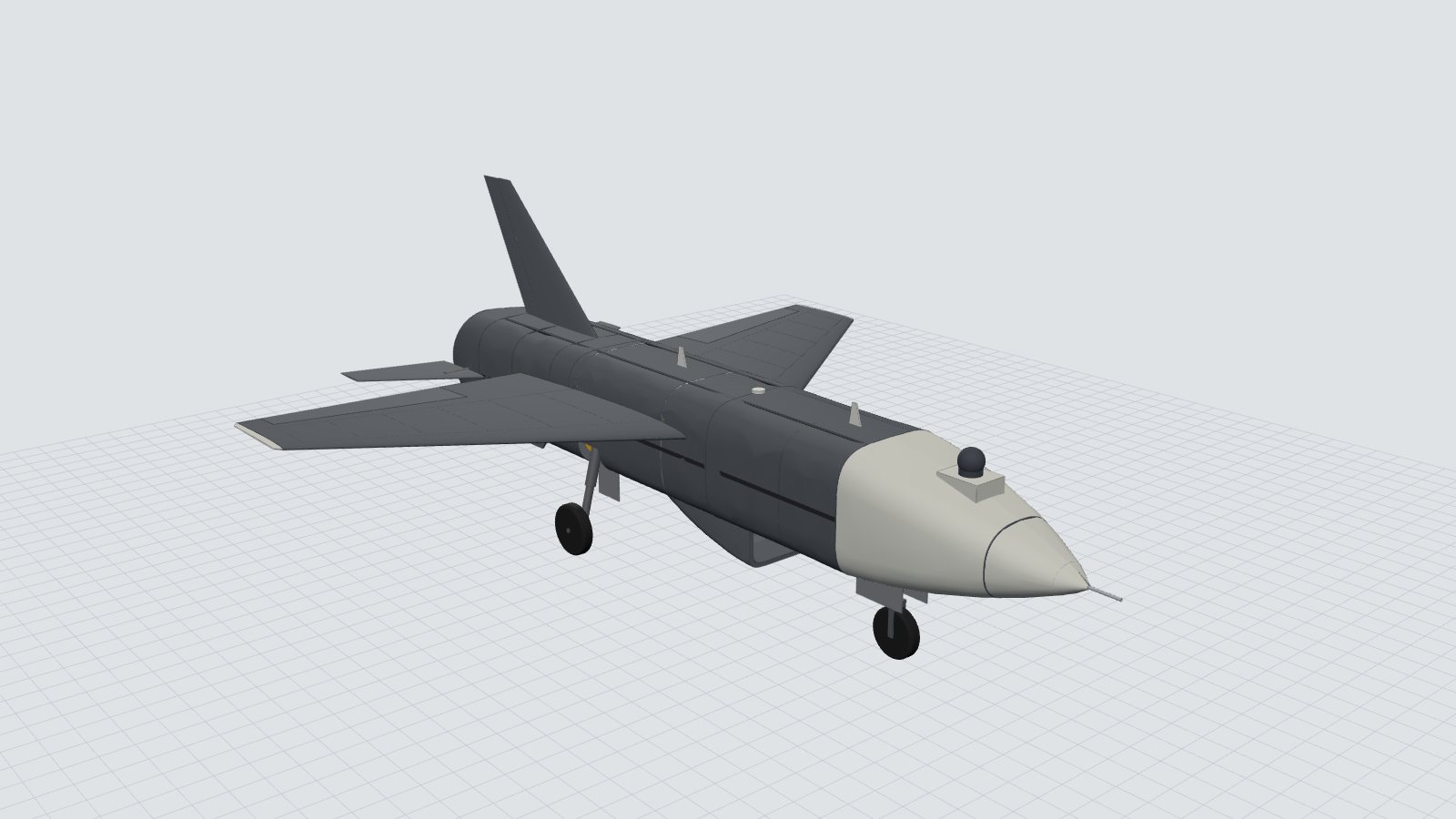
- FQ-44A collaborative combat aircraft, representative model of a publicly shown aircraft: 125 unique parts, 130 instances.
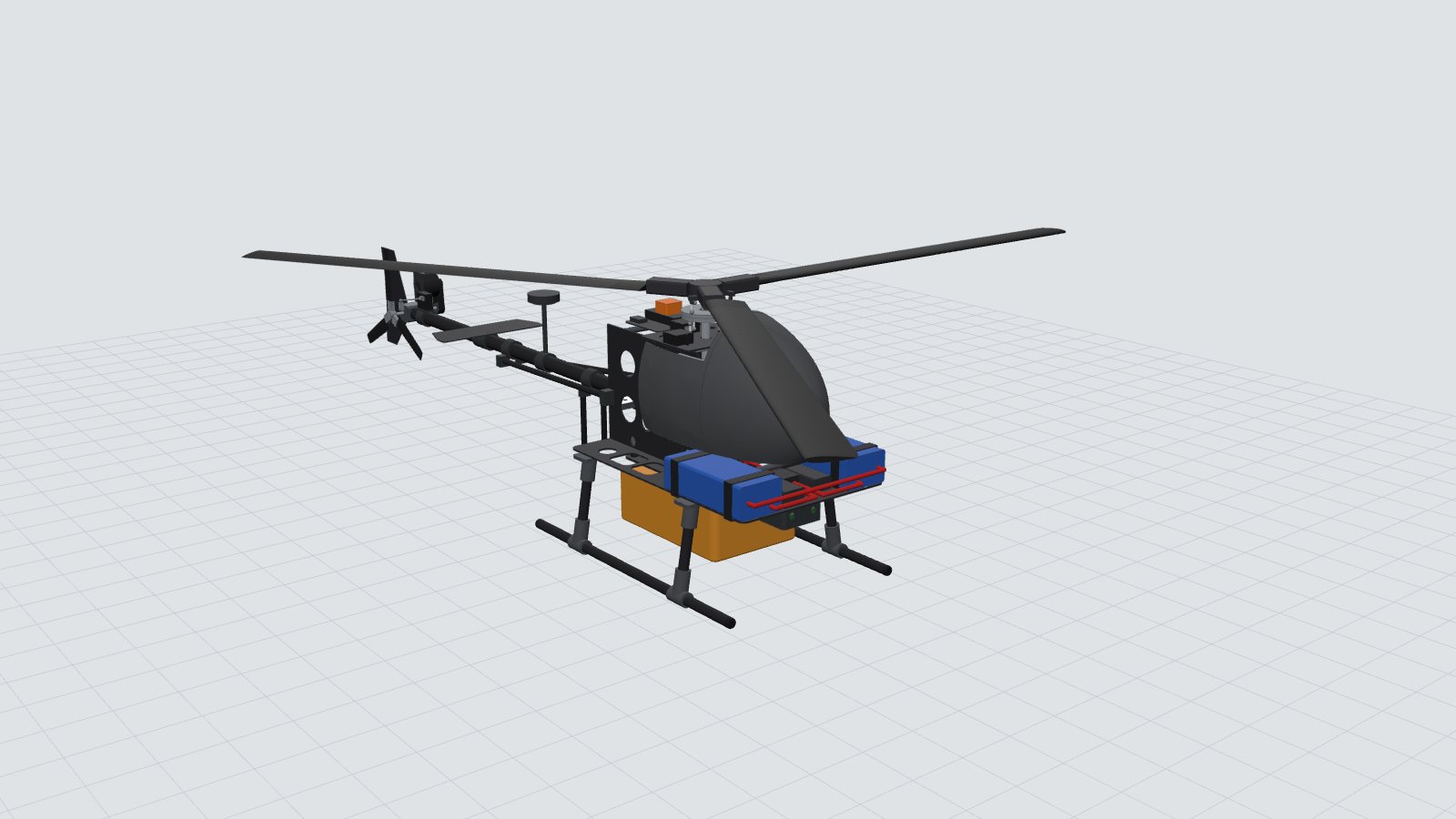
- Shade-X quiet ISR helicopter, original home-built design: 93 unique parts, 142 instances.
Every part is a parametric B-rep solid in CadQuery 2.8 on Open CASCADE 7.9, numbered by subsystem. All three assemblies report 0 clashes and 0 floating parts; the two fixed-wing models were confirmed with a two-stage check that screens every instance pair as meshes at 0.05 mm deflection, then re-tests candidates with exact B-rep booleans. Each assembly ships as one self-contained HTML viewer with orbit, standard views, explode, a live section plane and coloring by material or subsystem.
Only exterior geometry is published. A visibility pass renders every part in a unique ID color from 162 directions and drops any part that never shows a pixel, so the public viewers keep 44 of 60 LE-SR parts, 95 of 125 FQ-44A parts (stores and pylons removed first) and all 93 Shade-X parts. Parts lists, masses, materials and internal layouts stay private.
Interactive CAD
Drag to orbit, right-drag to pan, scroll to zoom; Iso, Front, Side and Top snap the camera, and Explode (or the E key) pulls the parts apart, with the slider setting how far. Exterior geometry only: parts that cannot be seen from outside, parts lists, masses and materials are removed from the data itself, so the exploded view separates the outer skins, surfaces and fittings, and the FQ-44A is shown without stores.
Isometric Anatomy Figures
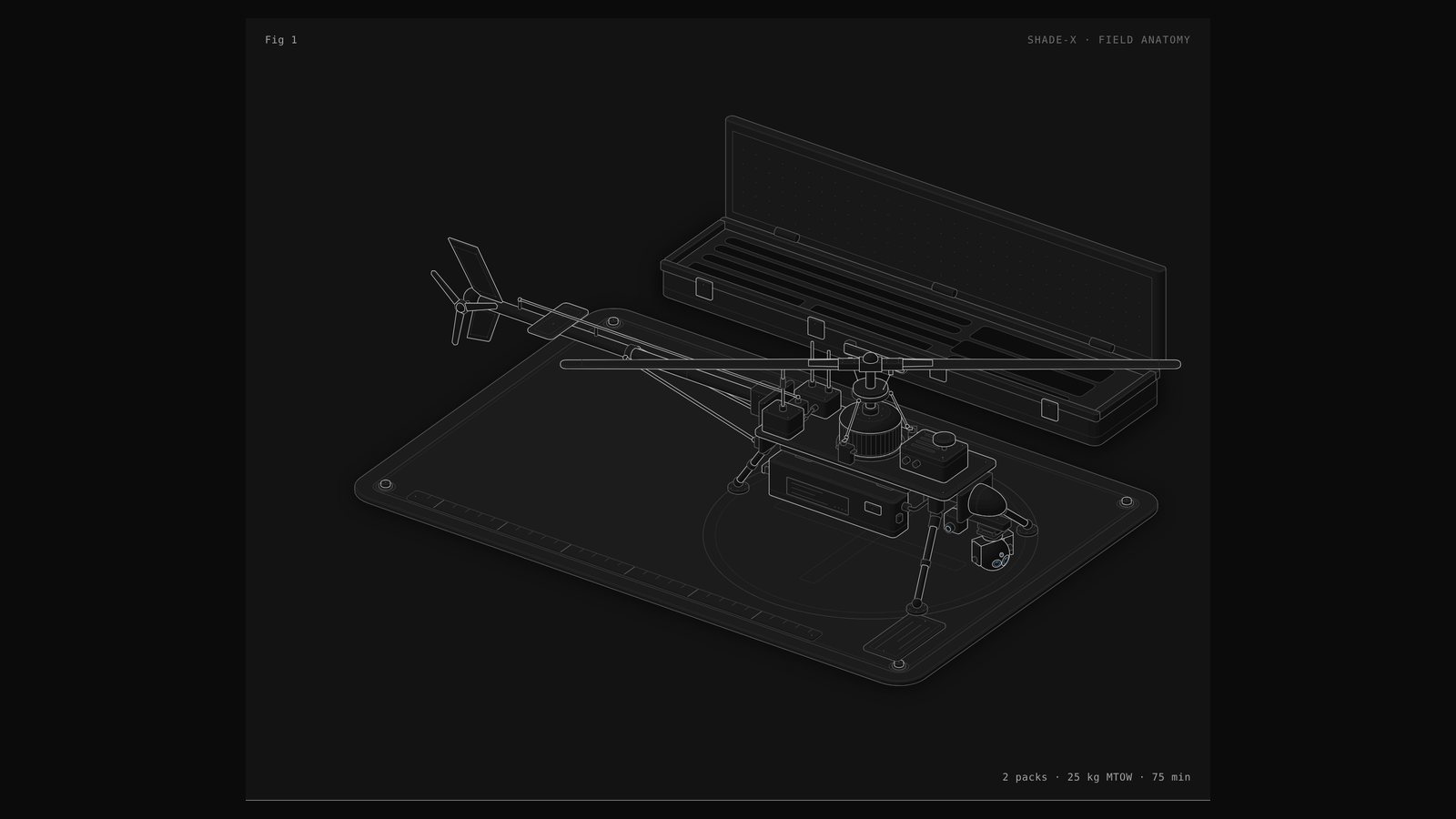
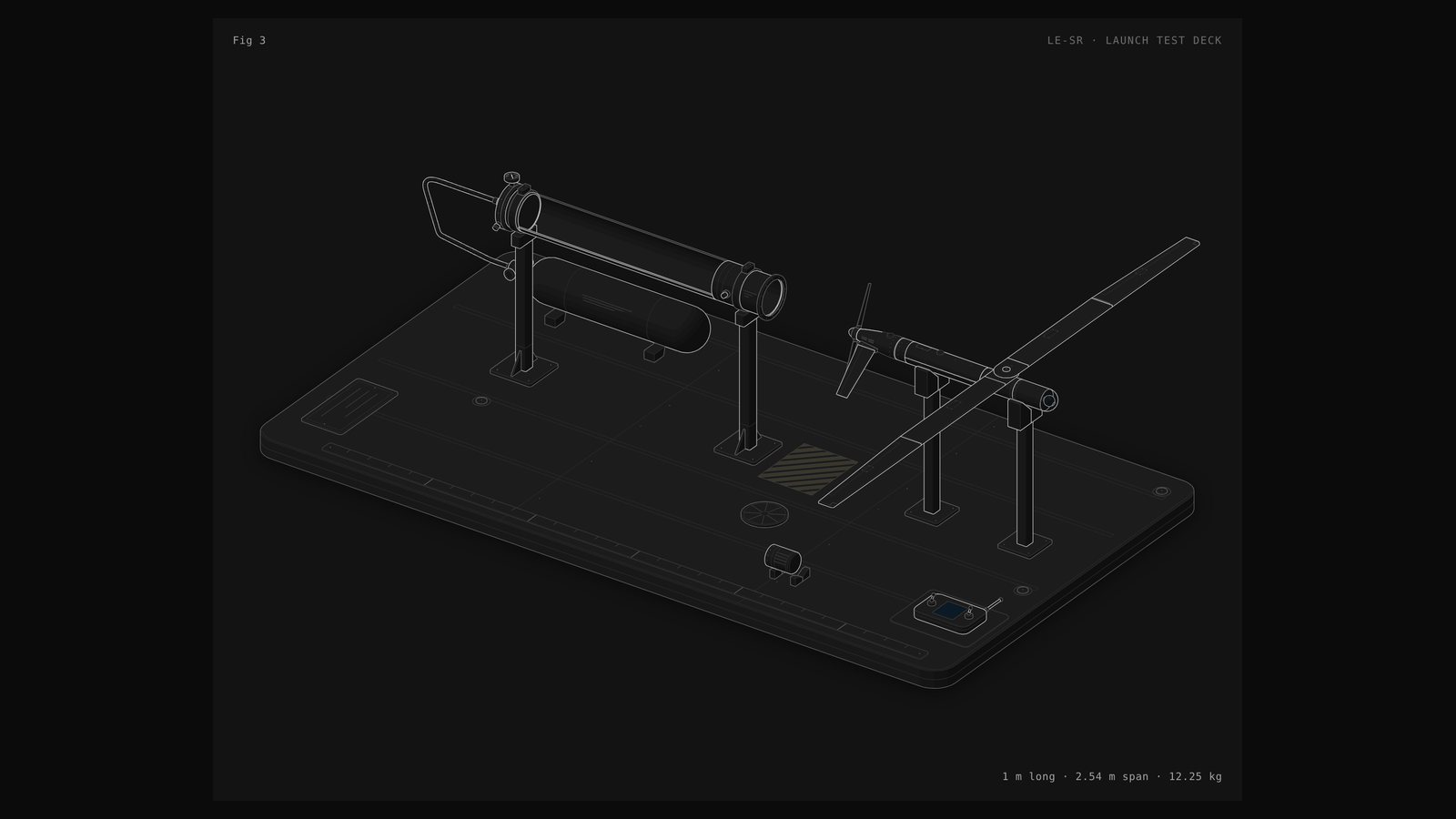
Two interactive SVG figures, drawn in a fixed isometric projection with four-tone shading and back-to-front painter's ordering, show how the Shade-X helicopter field kit (150 moving part groups in 10 assemblies, with WebGL rotor effects) and the LE-SR launch test deck (151 part groups, 13 explode steps) come apart.
Legal and Sourcing
Kill Web and these studies are an unofficial, non-commercial fan project. They are not affiliated with, endorsed or sponsored by Anduril Industries, Inc. or any other company. Units and studies carry fictional codenames or public government designations and program names (such as FQ-44A, AGM-189A and AST), never company product names; places, people and game values are fictional.
No company logos, photographs, documents or data are used. Game terrain, art, unit models and sound are generated by code in this project; two of the CAD models are representative studies of publicly shown aircraft, approximated from public photographs and published overall dimensions, and the public 3D viewers carry exterior geometry only; every performance value in the game is fictional, and hangar notes describe real-world classes of systems with links to public reporting. Third-party software: three.js (MIT License) and fonts under the SIL Open Font License. Built in AI-assisted development sessions with Claude (Anthropic). Questions or takedown requests: contact.